How Big Moods grew into national retail without building an ops department
Growth creates work long before it justifies a new department. For Big Moods, each new retail relationship brought more orders, more requirements, and more operational work for the same small team handling the back office. Their question was: can we eliminate it, simplify it, or automate it? That question now shapes their work with Agentway. When a process starts consuming the team, they bring it to us.
A big brand with a small team, on purpose
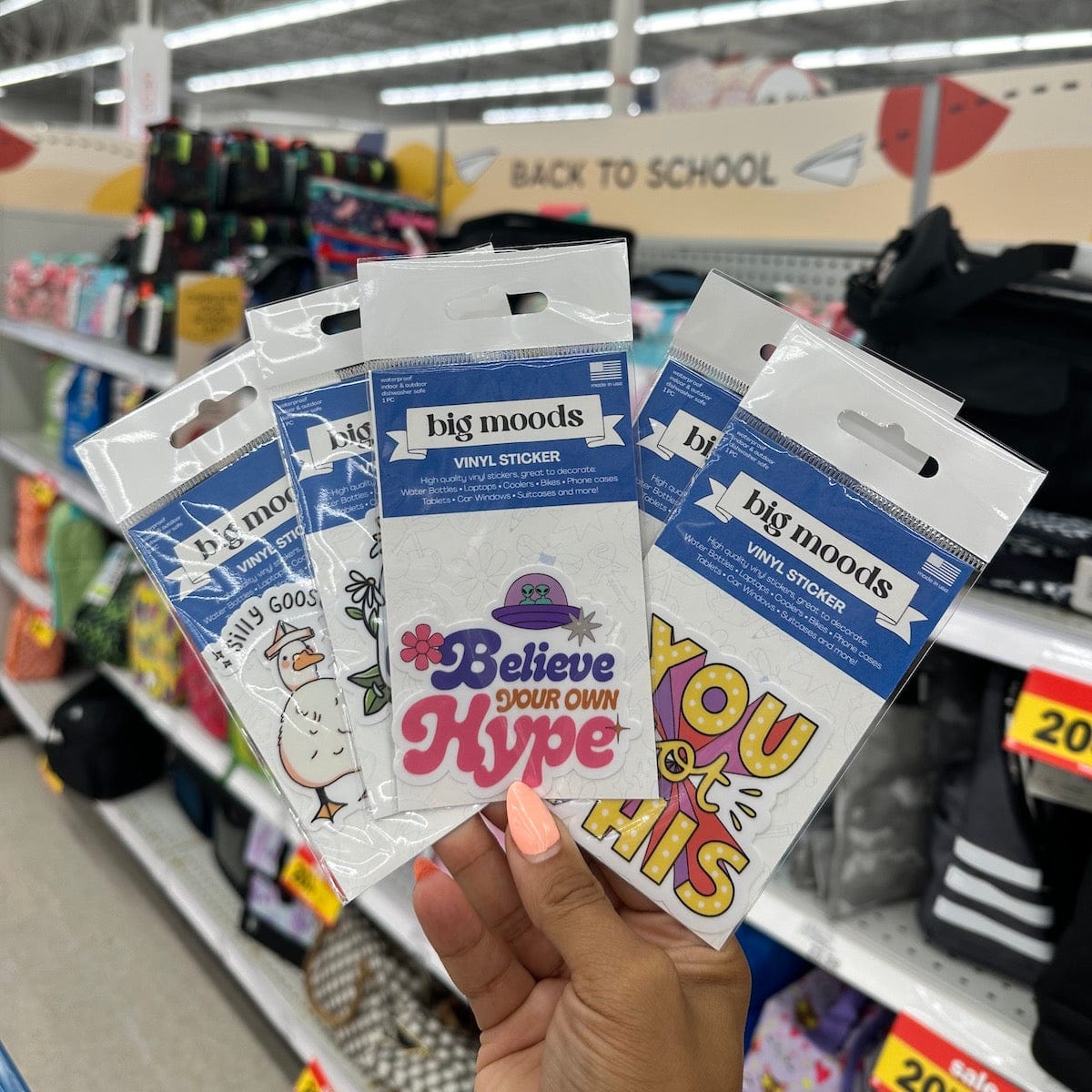
Big Moods is one of the best sticker brands in the country, selling millions of stickers a year. They sell custom designs direct to consumer on Shopify, they're a Top Shop on Faire with thousands of independent retail boutiques, and their products sit on shelves at Target, Cracker Barrel, Meijer, and a growing list of national chains. They've expanded from stickers into greeting cards, candles, and new product lines, and the wholesale side of the business keeps compounding.
What they have deliberately not done is build the org chart that usually comes with that footprint. It’s a small team that wants to spend its time on product, design, artists, and growth. The standing decision is to buy operational capacity from Agentway.


Eliminate, automate, or hire
The relationship started in customer support in the fall of 2025. Agentway took over the ticket queue, with full order history and tracking context behind every response and a human review loop where it mattered. Support is also where we earned the access and the trust for everything that followed, because running someone's inbox means being plugged into their Shopify data, their fulfillment partner, and their customers' actual problems.
The bigger opportunity surfaced in a February operations meeting. Wholesale purchase orders had become the most painful manual process in the company. A single Cracker Barrel order isn’t one purchase order. It can mean more than a hundred independent POs, one per store, shipping separately, each needing its own spreadsheet line, shipping label, packing slip, and retailer-specific compliance checks, where a formatting mistake means a chargeback. Someone on the team was spending entire days inside SPS Commerce, Excel, Google Sheets, and ShipStation doing transcription work that a national retail business simply generates as exhaust.
"We framed it exactly that way: can this be eliminated, can it be simplified, or can we automate it? Agentway's answer was to come watch us do it, then do it for us."
Joey Rexford, Co-founder, Big Moods
Prove it on one task first
We started the pilot by replicating one retailer’s existing workflow: the same spreadsheet formats, shipping label conventions, review steps, and handoff to Big Moods’ fulfillment partner. The first full batch covered more than a hundred purchase orders, with the team checking every output against what they would have prepared themselves.
That review caught what reviews are for, and this is the part we're proudest of. Our system flagged that one Iowa store's requested quantity didn't match their usual order. It caught an address validation step quietly rewriting requested street addresses, a chargeback risk nobody had priced in. The errors it surfaced were in the existing systems and the existing process, and finding them is how an automation earns the right to run on its own.
Nothing about this runs in a black box. Every batch produces a folder of artifacts Big Moods can open: the original PO PDFs, the generated labels and packing slips, a step-by-step log of what was done, and an independent AI audit pass over the results. The team approved the first batches by hand. Then the checkpoints they no longer needed fell away, and by May, hundred-PO batches were running clean with zero failures and zero manual interventions. One week that spring, a single retailer's volume represented nearly three thousand copy-and-paste steps that no person performed, and that's one retailer of many, every week, indefinitely.
Every retailer speaks its own dialect
What makes wholesale hard isn’t volume. It’s that every retailer enforces different rules: different acknowledgement and ASN requirements, case-pack and labeling rules, shipping workflows, and, for international orders, customs requirements. Boutique chains introduce their own warehouse and direct-to-store logic. Faire isn’t EDI at all. Boutique chains might want warehouse and direct-to-store splits handled differently. Faire isn't EDI at all.
So we built Big Moods a workflow per retailer, each one encoding the compliance rules that retailer actually enforces. New POs are discovered automatically, processed, and posted to a shared Slack channel within minutes of arriving, with the dollar amount and status attached. When Big Moods launched into a new national boutique chain this spring, standing up the workflow was a scoping conversation, not a months-long operations project.
Faire deserves its own mention because it's the story so many brands will recognize. The native integration had quietly broken, and a team member was rebuilding it by hand every day: exporting orders, importing them into ShipStation, then walking tracking numbers and shipping costs back into Faire so reimbursements didn't fall through the cracks. Today that entire loop is automated in both directions, thousands of orders a month, reconciled hourly, with a summary posted to Slack so everyone can see the system confirming its own work.
"The Slack channel is the operating system now. POs show up, get processed, and we see exactly what happened. We stopped wondering what state wholesale was in."
Kollin Currie, VP of Sales & Marketing, Big Moods
From doing the work to watching the business
Once you run a brand's order flow, you can see things the brand can't. Our fulfillment monitoring watches every order from label creation through delivery and flags the ones going stale. When it surfaced more than a hundred orders sitting in label-created status for over a week this spring, the more valuable finding was diagnostic: it could distinguish orders that were physically stuck from orders that were fine but had stale tracking data, which determines whether you chase your fulfillment partner or fix a sync. That's the difference between an alert and an answer.
That visibility layer now rolls up into executive reporting that ties together Shopify, Faire, ShipStation, SPS, and accounts receivable, so the leadership team gets an operating picture of wholesale that previously didn't exist at any price. The work has progressed from processing orders, to monitoring fulfillment, to answering questions about the business before anyone asks them.
Big Moods pays for this the way you’d pay for a team, because that’s the value it provides. As the business grows, new operational complexity becomes something we can absorb into the systems we already run, without pulling their team away from product, design, artists, and growth. That’s the partnership we’re building toward with every brand we work with: operations that compound.
Company: Big Moods, a leading sticker, greeting card, and candle brand
Channels: Shopify DTC, national retail (Cracker Barrel, Target, Meijer, and more), thousands of independent retailers via Faire
Stack: Shopify, Faire, SPS Commerce, ShipStation, Google Workspace, Slack, with Agentway as the operating layer across all of it
Your operations probably rhyme with these
If any of this sounded familiar, that's the point. We start with an audit of your workflows, build the first automation against your existing process, and prove it before it runs on its own.
FAQ
Frequently asked questions
What is Agentway, and what do you actually build and operate?
Agentway is a fully managed AI operations service for growing businesses. We design, build, and operate AI-powered workflows that run on top of the tools you already use—customer support, invoice and AP processing, purchase orders, payroll prep, financial reporting, and more. You don't get software to configure or a deck of recommendations; you get working automations that we host, monitor, and keep improving.